
There is a version of the U.S. college experience that gets shared on social media: the highlights, the travel, the facilities, the wins. Hannah and Cameron Roach are here to talk about the rest of it.
Both are Canadian, both played college soccer in the United States, and between them they have experienced three different schools across two divisions, conference championships and losing seasons, starting spots earned and lost, injuries, coaching changes, transfer portal chaos, and the particular challenge of being away from family for years at a time in a country that does not always know where New Zealand or Canada is on a map.
They joined the Platform Sports podcast for a conversation that does not flinch: what actually drove them to go, what the transition was harder than expected, how they kept themselves going when the sport was not going well, and what they would tell any athlete in Australia or New Zealand who is thinking about making the same leap.
The easy answer, and the one both siblings were specifically asked to avoid, is that their older brother Mackenzie did it first. That is true and it was an influence. But it is not the whole story.
For Cameron, it was about doing something different. Watching Mackenzie and Hannah build lives that looked genuinely different from the path most of his friends were taking, the travelling, the daily connection to the game, the people they were meeting from across the world, and understanding that the alternative was going to university in Canada and following the same path as everyone else.
“I always knew I wanted to go to school,” he says. “But being able to go somewhere new, somewhere different than all my friends at home, was definitely a benefit.”
For Hannah, the draw was similar but came with the added weight of knowing what she was giving up. She is not a homebody, she says, but she loves being able to go home. Going far meant learning to appreciate time at home more deliberately. What made it manageable was the team environment waiting on the other side.
“When you’re set up with a big team, lots of teammates, you don’t feel lonely. You always have friends, things to do, people to hang out with.”
Hannah’s college career is not the kind that fits neatly into a single story. She played at Ohio Valley University in West Virginia, Grambling State University in Louisiana, and Lenoir-Rhyne University in North Carolina, completing her master’s degree at the third. Three schools, two divisions, multiple coaching changes, and a conference final appearance at Grambling State in each of her three years there.
What she took from moving around was not frustration. It was adaptability.
“You’re never going to be completely prepared or feel like you know everything and can do everything. It’s always changing and you just have to be willing to roll with that.”
A coaching change mid-career could have derailed her. Instead, she describes how the team banded together around the new staff, adapted to a different style of play, and kept competing. When asked what made the winning environments work, her answer was not tactical. It was cultural.
“Everyone bonded really well. It wasn’t a lot of separate little groups. Everyone gets along very well because you’re there for the common goal.”
Cameron’s story has a shape that most recruitment conversations do not prepare athletes for.
He arrived at Niagara University expecting to play. He did not play a single minute in his first year. He redshirted, watched from the sideline, and had to quickly recalibrate what he thought he was capable of and what the level actually required.
“I entered college expecting to, obviously, be the man. That was not the case.”
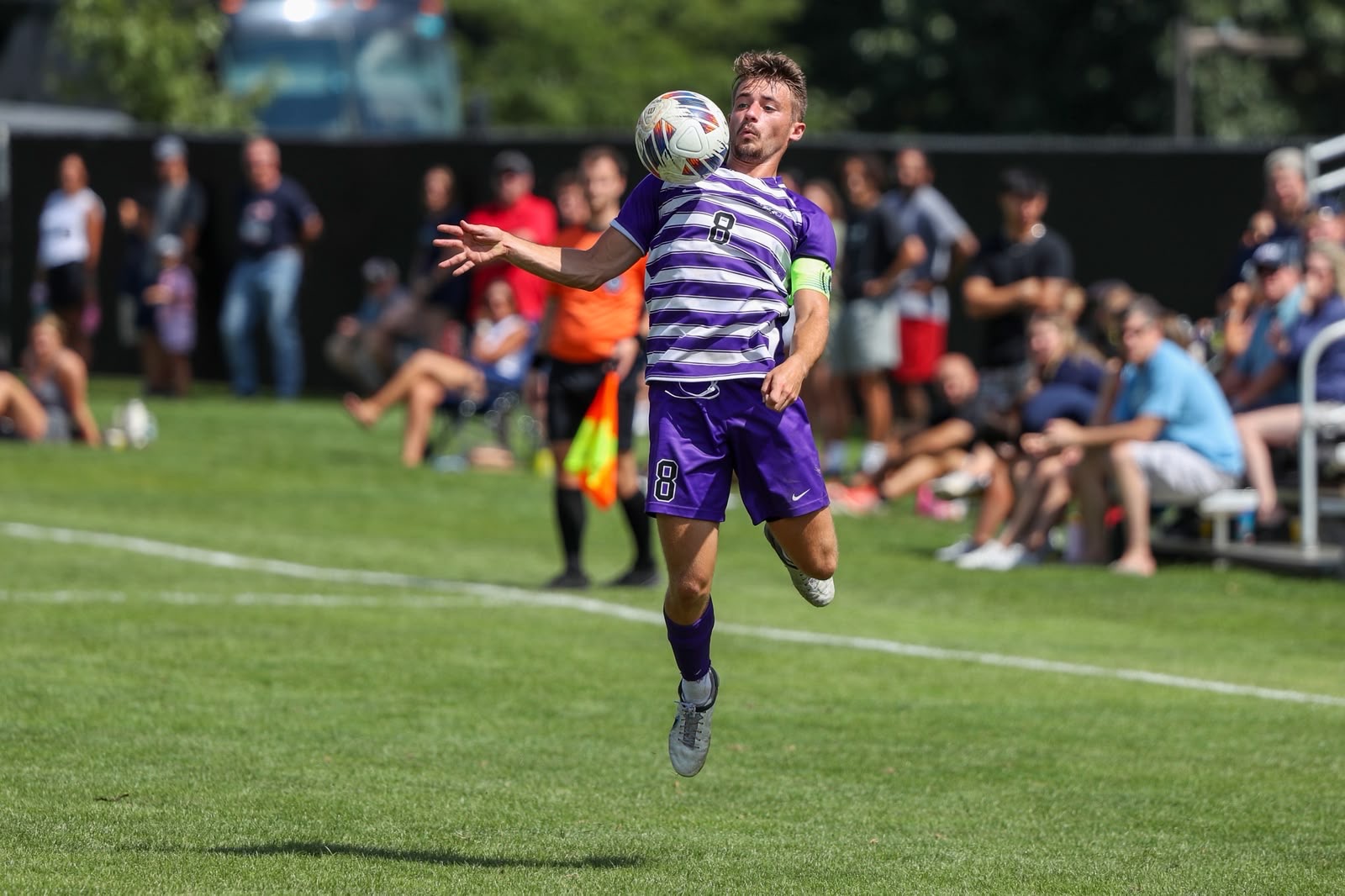
What followed was five years of consistent, unglamorous development. By his second year he was a starter. By the time he graduated he was captain. He came in without a scholarship and earned one. He also sustained injuries serious enough to keep him out for a full semester, which created a different kind of education.
Watching a captain play through a torn ACL the year before, never missing a practice, still leading without being on the field, shaped how Cameron thought about his own injury period. He stopped seeing it as lost time and started seeing it as another kind of contribution.
“You can mope about it. But there’s always something to find that will possibly impact a team when you’re not on the field.”
When a captaincy became available, he put himself forward. Not because he was the most talented player in the squad, but because he had spent five years learning what it looked like to show up for a team without needing the spotlight.
Both siblings describe periods of mentally checking out, and both are honest about what caused it.
For Hannah, it came from becoming too self-critical after mistakes. The cycle is familiar to anyone who has played sport at a serious level: you make an error, your mind fixes on the error rather than the next moment, and suddenly the gap between what you are capable of and what you are producing widens in a way that feels impossible to close.
“If your head’s not in it, your body’s definitely not in it.”
She lost her starting position during this period. Getting it back required learning to shift attention forward rather than dwelling on what had gone wrong. It made her a better player, she says. The check came at exactly the right time.
For Cameron, the mental challenge came from complacency as much as adversity. After fighting for two years to become a starter, the moment he got there, the hunger softened. He recognised it. The lesson, as he describes it, is that the environment that produces growth is the one where someone is always trying to take your spot. That should not feel like a threat. It is what keeps standards up.
The podcast asks a question most recruitment content avoids. What about the social side? Parties, the American college culture, all of it.
Both siblings are honest without being reckless.
Hannah’s answer is that a healthy balance exists and pretending it does not would be dishonest. She went to homecoming events, spent time in smaller social settings, and built friendships through those experiences. What she emphasises is knowing who you are around and what environment you are walking into.
Cameron goes further. He went out more than Hannah, particularly in his first year when he was not travelling with the team. He enjoyed it. He also felt the effects, in training, in body composition, in performance. He gained weight he then had to lose. His mind was not always where it needed to be.
“You go too far, then you learn how to find the balance.”
His point is not that athletes should avoid the social parts of university life. It is that the balance has to be worked out through experience, and ideally through watching teammates who already have it figured out rather than through the harder lessons he had to learn himself.
At the end of the conversation, both siblings were asked for a single piece of advice to any athlete in Australia or New Zealand thinking about making the move.
Hannah’s answer was about expectations. She transferred three times, and each time her mind was set on one specific outcome before something unexpected changed it. A class that did not transfer, a programme that shifted direction, a decision that forced a new path. What made each transition work was being willing to let the outcome be different from what she had planned.
“Keep an open mind. Being open to things going differently than what you expected is huge.”
Cameron’s answer was about how to hold difficulty. Not what to do with it, but how to frame it. Every setback, every injury, every losing season, every lost starting spot, is information. It is not evidence that you should not be there. It is part of the process.
“Take everything as a learning experience. Anything good or bad, learn from it.”
Less than one per cent of high school athletes ever receive a scholarship in any sport. Getting there in the first place, and staying, and competing, and coming back with something real from the experience, that is the whole point. Hannah and Cameron Roach have both done it. And they are very clear that the parts that were hard were also the parts that mattered most.
Will I start as a freshman?
Probably not. Cameron did not play a single minute in his first year at a Division I programme. The level is faster and more physical than most international athletes expect. The athletes who eventually earn starting spots are the ones who kept working when they were not playing.
What if I miss my family?
You will. But the team environment fills more of that gap than most athletes expect before they go. Cameron’s first Thanksgiving away from home, an American teammate had the whole squad over. Hannah says having a good group of people around you means you rarely feel truly alone, even when you are far from home.
What if I want to transfer?
It is more common than ever and nothing to be embarrassed about. Hannah played at three different schools. Each transfer came with uncertainty, but each one also opened a door she did not expect. The key, she says, is keeping an open mind when things go differently than planned.
Is the social side of college life a problem?
It can be if you have no framework for it. Cameron went too far early and felt it in training and in his body. His advice is not to avoid it entirely but to find the balance, ideally by watching teammates who already have it figured out.
What happens if I get injured?
Cameron missed a full semester through injury. He used that time to develop as a leader rather than a player. It shaped how he thought about captaincy and contribution. Injury is not the end of your college career. How you respond to it can define the rest of it.
What if the team is losing and nothing is going right?
Cameron’s team finished last in conference one season. His answer is to get your mind off the sport when you can, stay grateful for being there in the first place, and find something positive in the experience rather than letting a bad run define the whole year.
If you are a student-athlete or parent thinking about the U.S. college pathway, start with a conversation. Platform Sports can help you understand your options, your timeline, and what real preparation looks like.
